Back to work

Primus

Flame Indicator

When using a backpacking stove, it can be difficult to know whether the flame is burning or not, especially if you are outside on a sunny day. In this project together with Primus, the goal was to create an analogue indicator that would detect if there was a flame or not, eliminating the need for constantly checking. This would be especially beneficial for new users who are not as used to the stoves.

Flame indicator project image

Pre-studies & market analysis

Comprehensive pre-studies were conducted to explore material properties and manufacturing methods. Early technical evaluations determined that heat from the flame was the only reliable source for flame detection. To map the competitive landscape, we analyzed market positioning, studied existing patents, visited retail stores, and performed a deep dive into the semiotics of indicator design.

User research and insights

To anchor the project in user-centered design, user studies were performed to map stove usage, identify market favorites, and pinpoint critical user pain points. This research was synthesized into stakeholder maps, customer journey maps, and a structured Quality Function Deployment (QFD) to establish the project's core requirements.
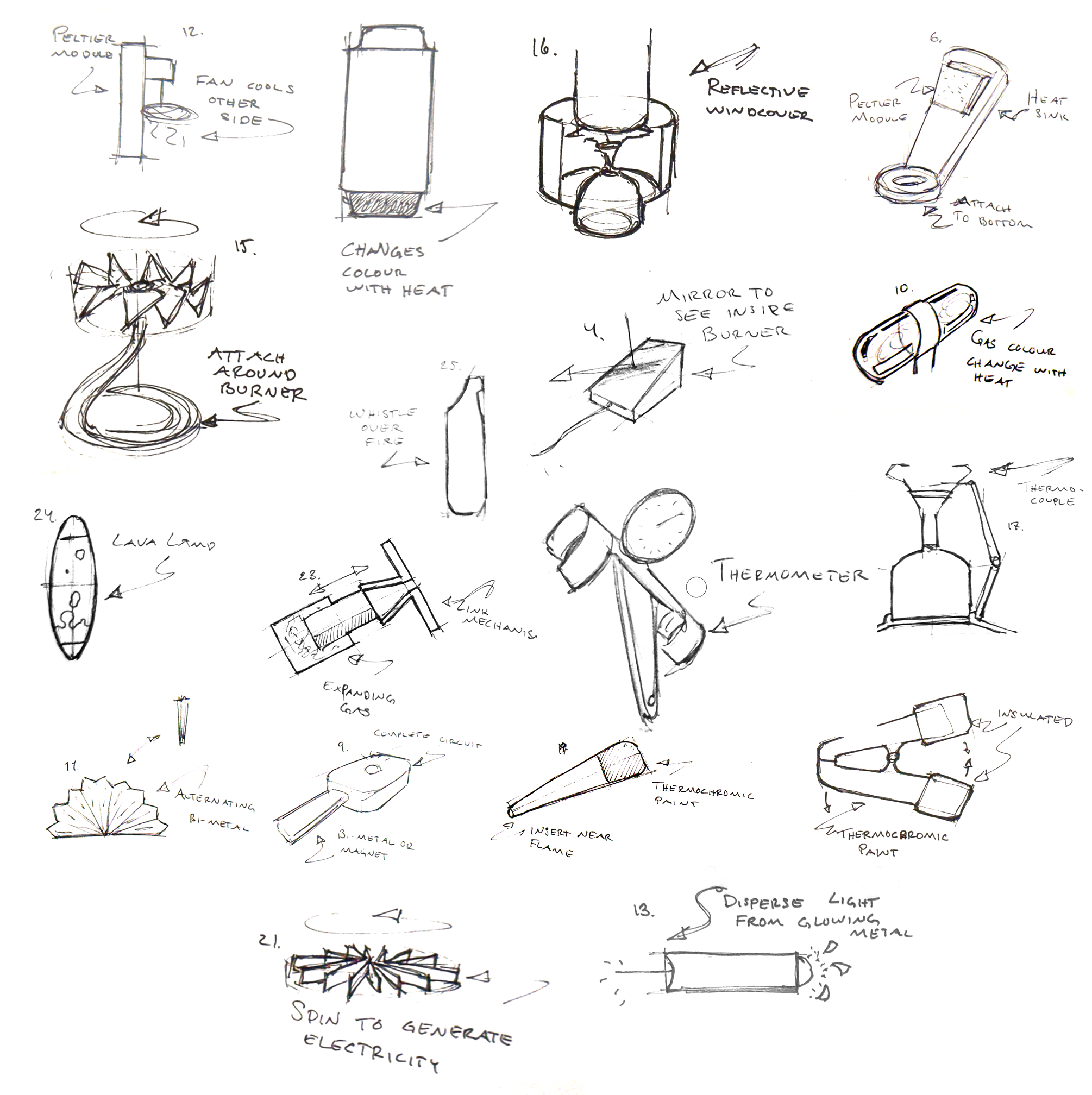
Concept generation

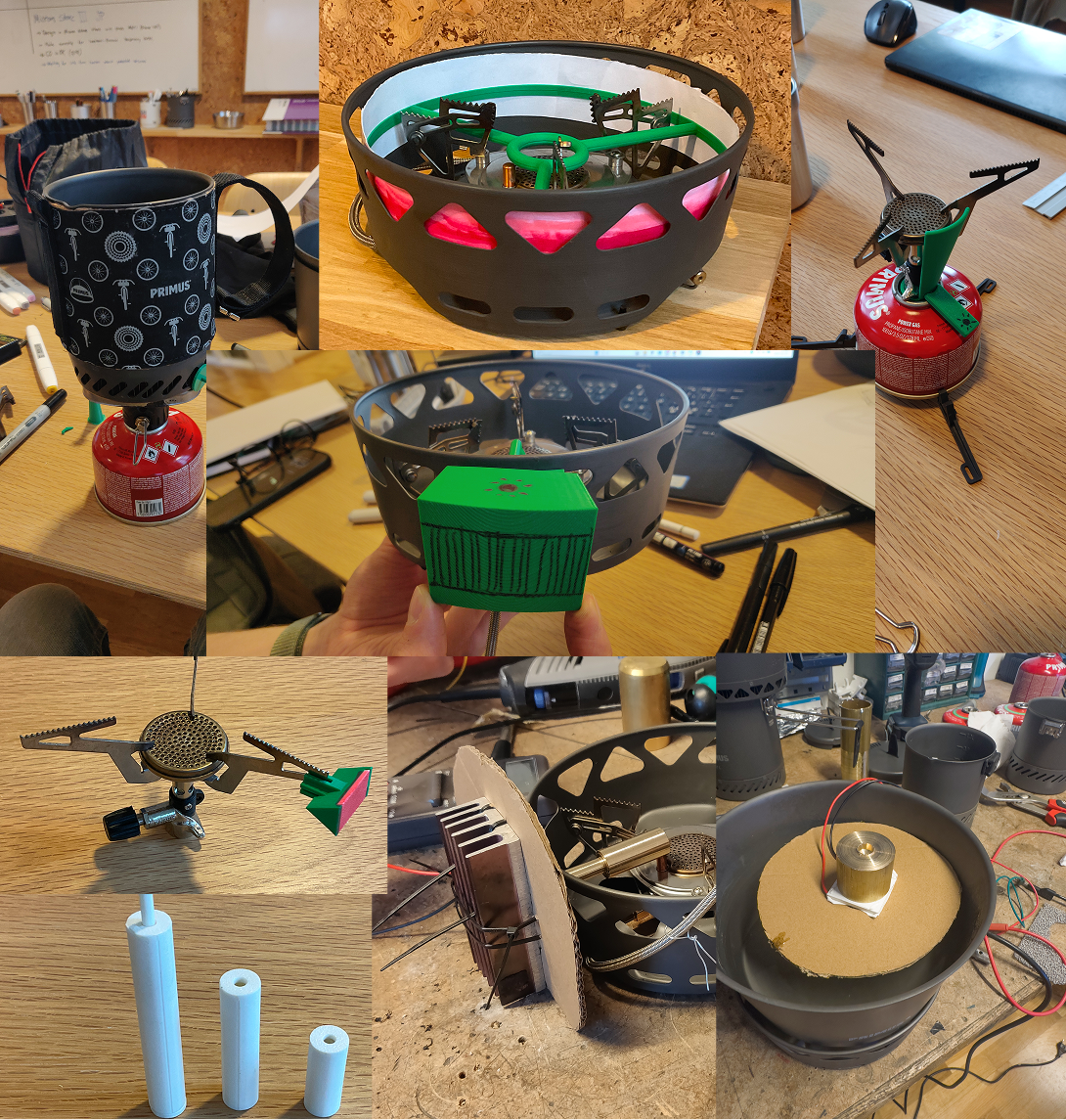
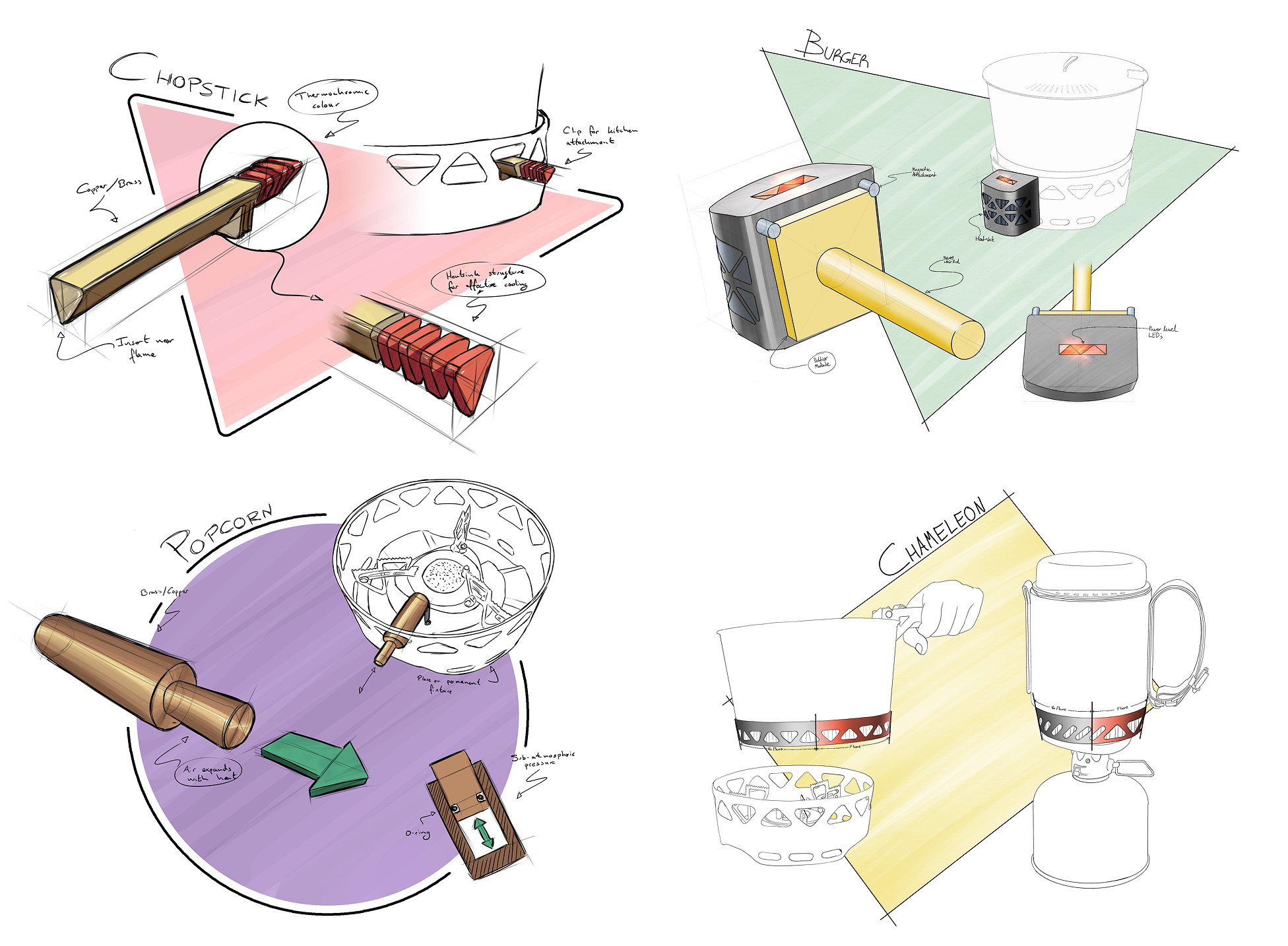
Following initial brainstorming, four distinct concepts were developed, each exploring a different mechanical or chemical approach to heat detection:

  • Chopstick: A brass rod inserted near the flame conducts heat to its outer end, which is coated in thermochromic paint that changes color when hot.
  • Burger: Uses a Peltier module sandwiched between a flame-heated brass rod and a cool heat sink. The resulting temperature differential generates a voltage to power indicator LEDs.
  • Popcorn: A pneumatic concept where heat expands air inside a sealed chamber, driving a piston outward. As the system cools, the piston retracts.
  • Chameleon: A chemical approach where the heat-exchange cover of specific pots is coated in thermochromic paint, providing a direct visual cue when the stove is hot.

Prototyping & concept selection

Initial prototypes were created for all concepts to validate their functionality. While all concepts are feasible, some would require a lot of work with geometry to allow for a quick cool down. The Chameleon concept emerged as a clear winner and was moved forward with.

Further iterations

Working with branding, different iterations of designs were created. What part should change colour? What should it look like? What colours do we use? Discussing this together with Primus landed in that covering the entire heat exchange cover with paint would be the best way forward, as that was what they felt most in line with their brand identity.

Final product

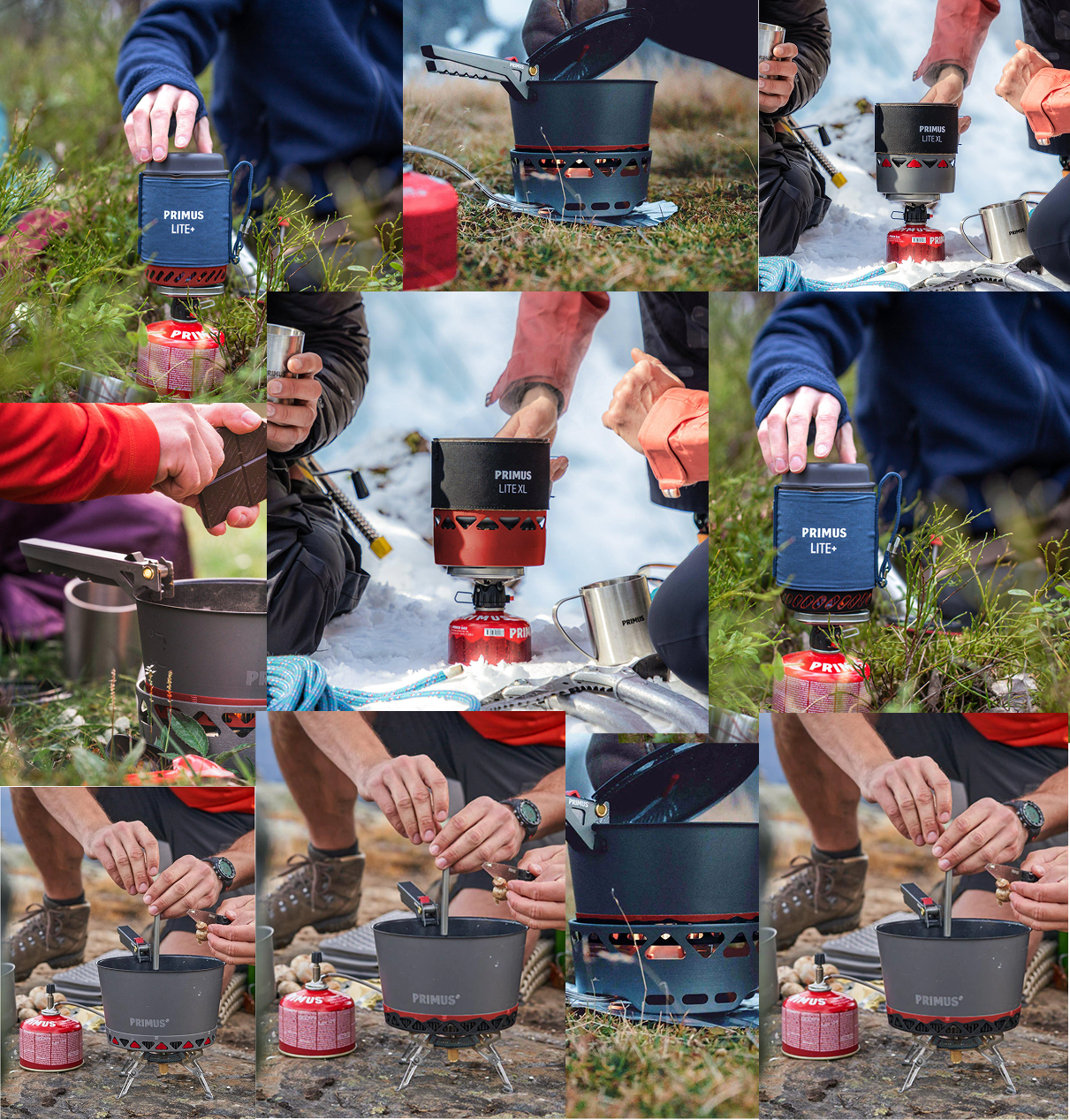
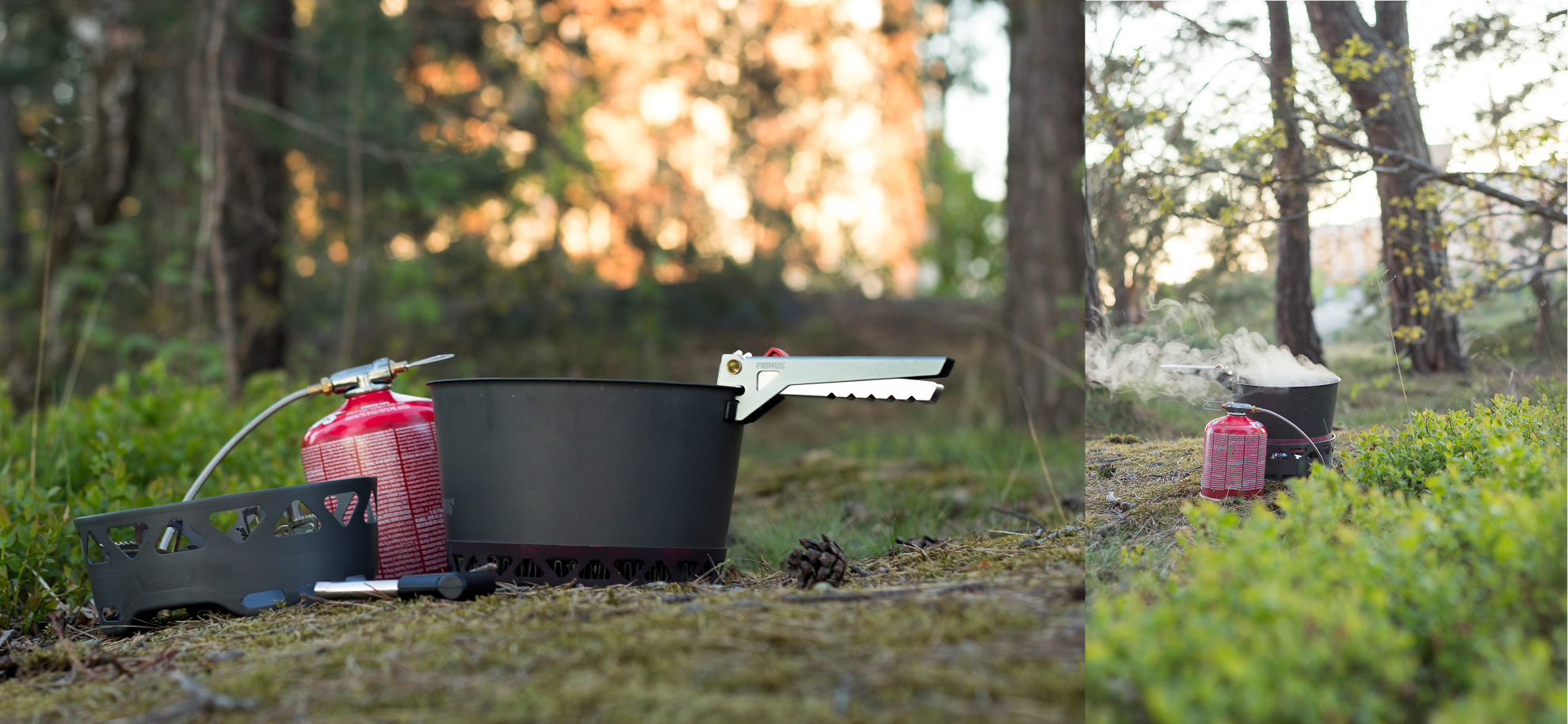
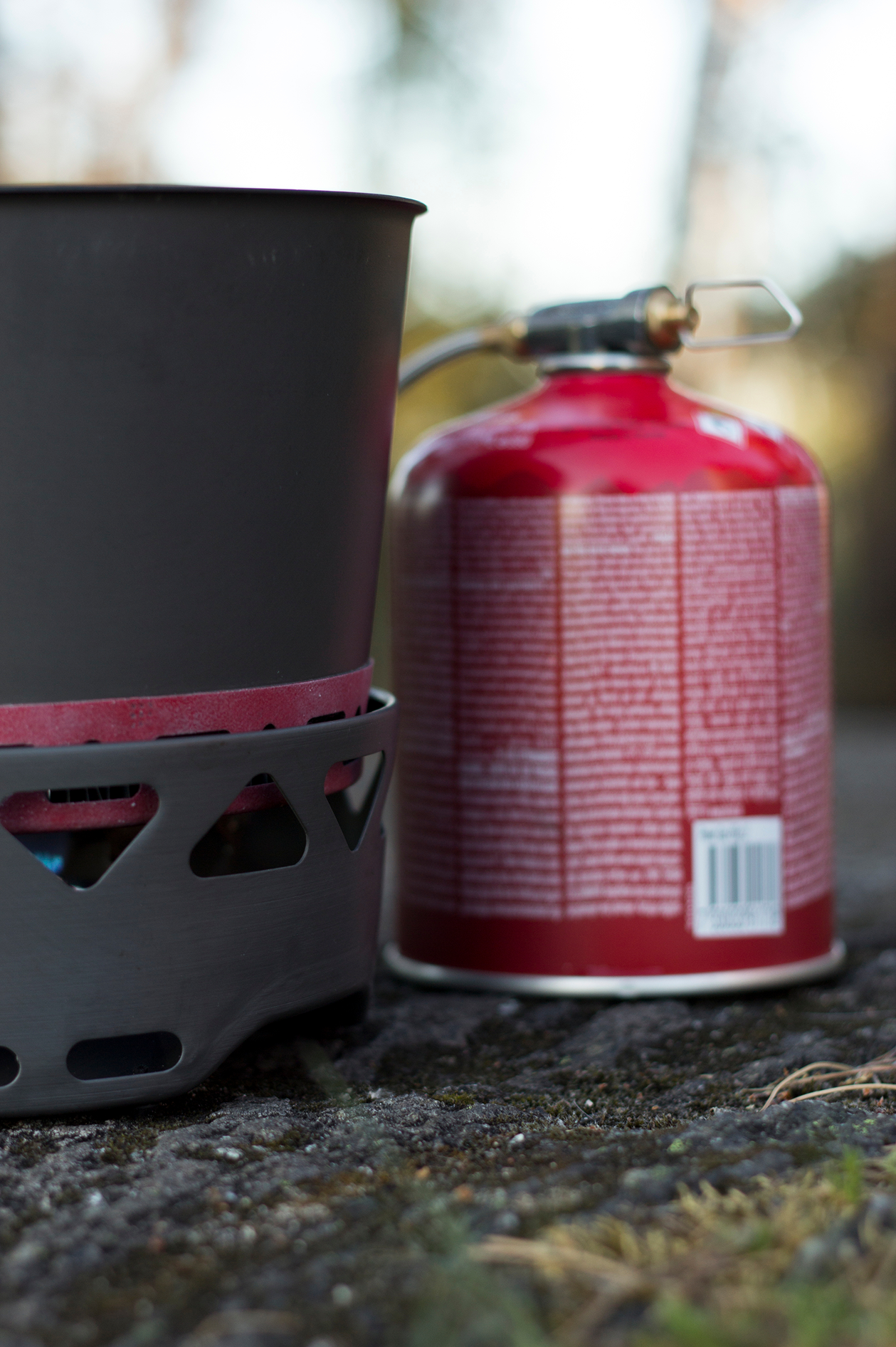
The final solution is a thermochromic paint applied to the heat exchange covers of pots for various stoves. The paint is black but turns transparent when a certain temperature threshold has been reached, thus revealing a red anodised surface beneath. If the flame is extinguished, the paint falls in temperature and returns to black. Therefore, a red colour will signify that the propane flame is still burning while a black colour signifies that it has gone out. The red colour also doubles as a warning, signifying that the area is hot and that contact with bare skin should be avoided.

Use case of the final product